Deleted userNov 16, 2016
I thought it was interesting that the text referred to the Miranda Warning as a “straight jacket” on police enforcement. I do not think following the procedures learned in the Academy is necessarily a straight jacket so long as a police official does their due diligence. I believe the Miranda Warning is incredibly important, as many people do not know their rights at the time of arrest. Not knowing an attorney will be provided or that any words said from that point on can be used as evidence in court is not necessarily common sense for people alike. Because of that, it is imperative that we sustain and encourage the continuation of Miranda Warnings. With that being said, I am not entirely sure to what extend I would use the absence of a Miranda Warning to dismiss a case in court. I believe some compensation in sentencing time or fines should be implemented, but not to the extent in which the convicted eludes punishment.
Reply
Kevin Lyles
Kevin Lyles
My (our) text does not say this, please do not misquote my (our) writing. smile. but really…
Nov 16, 2016•Edit•Delete
Deleted user
Deleted user
My apologies; I should have better clarified that the opinion expressed above was not by the authors of the text but rather is a general opposition argument that was briefly mentioned. The exact quote is “Legislators and ‘law and order’ proponents condemned the Court for ‘strait jacketing’ the police and ‘coddling’ criminals with the Miranda requirements,” (357). My comment was in reference to that specific argument mentioned. Again, my apologies for not specifying.
Nov 16, 2016•Delete
Kevin Lyles
Kevin Lyles
not a problem at all, I am utlra-sensitive about what gets attributed to me.
Nov 16, 2016•Edit•Delete
Kevin Lyles
Jenny Huh
Jenny HuhNov 15, 2016
what’s the point of the miranda rights if we use it in not all cases but only in some instances?
Reply
Kevin Lyles
Kevin Lyles
“what is the point?” I am genuinely interested in your answer?
Nov 15, 2016•Edit•Delete
Kevin Lyles
Deleted user
Deleted userNov 16, 2015
As illustrated throughout the readings, the interpretation of Miranda rights has evolved over the decades. A clear example of this is in Illinois v Perkins in which Justice Marshall in his dissent ascertained that the police acting undercover could “intentionally take advantage of suspects unaware of their constitutional rights.” This progression i would expect to continue to change along with our changing attitudes and assumptions on the rights of the accused.
Reply
Comments above copied from original document
Deleted user
Deleted userNov 16, 2015
In McNeil v. Wisconsin, Justice Scalia stated in his opinion that an assertion made by a defendant of the Sixth Amendment’s guarantee to counsel does not imply in itself an invocation of Miranda Fifth Amendment rights. Moreover, it is stated in the reading that since McNeil, this has marked a period in which great deference has been given to law enforcement officials by the Court in its refinement in the area of Miranda jurisprudence.
Thomas Delregno – Team 4
Reply
Comments above copied from original document
Deleted user
Deleted userNov 16, 2015
Warren Court – expands Miranda ruling
Burger Court – restricts Miranda ruling
Rehnquist Court – further restricts Miranda ruling
Roberts Court – unlikely to make any large changes, only slight refinements in its Miranda jurisprudence
Team 4 – Joe Anderson
Reply
Comments above copied from original document
Deleted user
Deleted userNov 15, 2015
At first the Miranda rights met with heavy opposition, but as time went on they became accepted. At this point, as the book says, the Courts are unlikely to make any large changes to the Miranda rights out of a worry that doing so will “unnecessarily blur the edges of the clear line… established.”
Reply
Comments above copied from original document
Maria E
Maria ENov 15, 2015
Two interesting points in the reading:
1. The extension of the Miranda serves as a , ” constitutional straitjacket on law enforcement” – Justice Byron
2. “Public safety exception” to Miranda
Reply
Comments above copied from original document
Deleted user
Deleted userNov 18, 2014
These pages lamented on how the Maranda rule was being used and how it progressed.
Oregon v Mathiason was interesting to me, a man came and confessed a crime willingly. Oregon court reversed his conviction because his rights were not read to him first. Then supreme court reversed that saying he had not lost his freedom prior, so it was not required.
I also liked Turgid Marshall’s dissent in Illinois v Perkins and 1984 New York v Quarles.
“the court’s adoption of the ‘undercover agent’ exception to the miranda rule thus is necessarily also the adoption of a substantial loophole in our jurisprudence protecting suspects’ firth amendment rights”
Reply
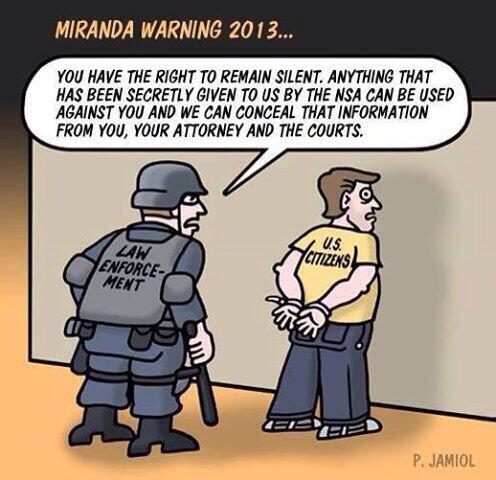
Awesome image, and good website, please visit to my blog nebengartikel.web.id
[…] Developing Miranda Jurisprudence in the Warren, Burger, Rehnquist, and Roberts Courts, Lyles, pp. 35… […]
Deleted userNov 16, 2016
I thought it was interesting that the text referred to the Miranda Warning as a “straight jacket” on police enforcement. I do not think following the procedures learned in the Academy is necessarily a straight jacket so long as a police official does their due diligence. I believe the Miranda Warning is incredibly important, as many people do not know their rights at the time of arrest. Not knowing an attorney will be provided or that any words said from that point on can be used as evidence in court is not necessarily common sense for people alike. Because of that, it is imperative that we sustain and encourage the continuation of Miranda Warnings. With that being said, I am not entirely sure to what extend I would use the absence of a Miranda Warning to dismiss a case in court. I believe some compensation in sentencing time or fines should be implemented, but not to the extent in which the convicted eludes punishment.
Reply
Kevin Lyles
Kevin Lyles
My (our) text does not say this, please do not misquote my (our) writing. smile. but really…
Nov 16, 2016•Edit•Delete
Deleted user
Deleted user
My apologies; I should have better clarified that the opinion expressed above was not by the authors of the text but rather is a general opposition argument that was briefly mentioned. The exact quote is “Legislators and ‘law and order’ proponents condemned the Court for ‘strait jacketing’ the police and ‘coddling’ criminals with the Miranda requirements,” (357). My comment was in reference to that specific argument mentioned. Again, my apologies for not specifying.
Nov 16, 2016•Delete
Kevin Lyles
Kevin Lyles
not a problem at all, I am utlra-sensitive about what gets attributed to me.
Nov 16, 2016•Edit•Delete
Kevin Lyles
Jenny Huh
Jenny HuhNov 15, 2016
what’s the point of the miranda rights if we use it in not all cases but only in some instances?
Reply
Kevin Lyles
Kevin Lyles
“what is the point?” I am genuinely interested in your answer?
Nov 15, 2016•Edit•Delete
Kevin Lyles
Deleted user
Deleted userNov 16, 2015
As illustrated throughout the readings, the interpretation of Miranda rights has evolved over the decades. A clear example of this is in Illinois v Perkins in which Justice Marshall in his dissent ascertained that the police acting undercover could “intentionally take advantage of suspects unaware of their constitutional rights.” This progression i would expect to continue to change along with our changing attitudes and assumptions on the rights of the accused.
Reply
Comments above copied from original document
Deleted user
Deleted userNov 16, 2015
In McNeil v. Wisconsin, Justice Scalia stated in his opinion that an assertion made by a defendant of the Sixth Amendment’s guarantee to counsel does not imply in itself an invocation of Miranda Fifth Amendment rights. Moreover, it is stated in the reading that since McNeil, this has marked a period in which great deference has been given to law enforcement officials by the Court in its refinement in the area of Miranda jurisprudence.
Thomas Delregno – Team 4
Reply
Comments above copied from original document
Deleted user
Deleted userNov 16, 2015
Warren Court – expands Miranda ruling
Burger Court – restricts Miranda ruling
Rehnquist Court – further restricts Miranda ruling
Roberts Court – unlikely to make any large changes, only slight refinements in its Miranda jurisprudence
Team 4 – Joe Anderson
Reply
Comments above copied from original document
Deleted user
Deleted userNov 15, 2015
At first the Miranda rights met with heavy opposition, but as time went on they became accepted. At this point, as the book says, the Courts are unlikely to make any large changes to the Miranda rights out of a worry that doing so will “unnecessarily blur the edges of the clear line… established.”
Reply
Comments above copied from original document
Maria E
Maria ENov 15, 2015
Two interesting points in the reading:
1. The extension of the Miranda serves as a , ” constitutional straitjacket on law enforcement” – Justice Byron
2. “Public safety exception” to Miranda
Reply
Comments above copied from original document
Deleted user
Deleted userNov 18, 2014
These pages lamented on how the Maranda rule was being used and how it progressed.
Oregon v Mathiason was interesting to me, a man came and confessed a crime willingly. Oregon court reversed his conviction because his rights were not read to him first. Then supreme court reversed that saying he had not lost his freedom prior, so it was not required.
I also liked Turgid Marshall’s dissent in Illinois v Perkins and 1984 New York v Quarles.
“the court’s adoption of the ‘undercover agent’ exception to the miranda rule thus is necessarily also the adoption of a substantial loophole in our jurisprudence protecting suspects’ firth amendment rights”
Reply