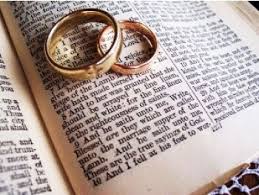
Churches do not perform marriages. Churches perform weddings. A “wedding” is a ceremony and associated events to celebrate a marriage. These rituals are important for many reasons.
Marriage is a legal contract, a permit you pay for at your county or city clerk’s office. It is the legal union of two people. Once a couple is married, their rights and responsibilities toward one another concerning property and support are defined by the laws of the state in which they live.
We should not confuse the two. No matter who you love, you have a RIGHT to be married. But, you may not be allowed to have a wedding in the place (church, synagogue, mosque, etc.) of your choosing.
Legally speaking marriage bonds two people together, but socially a wedding bonds two people together. Marriage goes farther in depth. Often times including rights, property and responsibility. Weddings are symbolic.
Weddings and marriages aren’t the same thing, but there’s so much overlap that it feels like a bad faith argument to say that gay people should be content with having a marriage without a wedding. At least for India, there’s such a culture surrounding weddings that it would be a dishonor to not have one.
A wedding is celebratory event. However, certain religions don’t allow certain partnerships.
While a marriage is essentially a contract that any individual regardless of their gender they can obtain.
Marriage is a lifelong commitment between two people who will share life, stability, and mutual support.
A wedding is a ceremony that symbolizes the commitment and love between two people through a variety of traditions.
Sometimes weddings take forever to happen.
A marriage is the legal relationship between two people. It is created by the state through a marriage license, and it comes with legal rights and responsibilities, like rules about property, support, and other protections.
A wedding is the ceremony or celebration that marks a marriage. It can be religious or nonreligious, and it often includes traditions that are meaningful to the couple, their families, or their faith community.
A marriage is a legal union between two people to bind their social relationship for legal and financial purposes now. Weddings are more religious ceremonies that confer the marriage through traditional cultural values of the person getting married. You don’t have to have a wedding to be legally married, at least in the United States, you can just go to the local courthouse and get married that same day.
Marriage is a legal agreement recognized by the state, while a wedding is just a ceremony to celebrate it. It also shows that people have the right to marry, but not always the right to have a wedding in any place they want.
Marriage is something that legally binds two individuals, but a wedding is something that socially binds two individuals. Marriage is much more in depth, often involving combined rights, property, and responsibilities. Weddings are more symbolic.
Marriage: legally recognized union between two people that creates obligations.
Wedding: a ceremony (and celebration) that marks a marriage, often shaped by traditions.
Good distinction. It comes down to marriage being a legal contract (actually registering and receiving a license). I have heard some religious people say they are married, but they only participated in a wedding ceremony. Many can say they’re married, but when it comes down to actually being legally married, that’s a distinct situation.
That’s actually super interesting, so marriage is a legal status by the state, while a wedding is just a ceremonial or religious celebration that marks a legal union.
This comparison of the two words/terms is interesting because I feel that so many people use them interchangeably, especially nowadays. Marriage is a contract bound by laws, and a wedding is a celebratory ceremony.
I find it intriguing how interrelated these two terms are. Marriage and wedding are used interchangeably in some cases where defendants argue that churches or private spaces not allowing same-sex weddings violate their rights to get married. As a society, we often conflate these terms, which are not the same. Marriage is a legal contract that provides legal rights about property, support, and decision-making between partners. While weddings are ceremonies or celebrations held by churches or other venues, they do not make a marriage legal.
Marriage is a legal status created by the state, not a religious ceremony. Churches perform weddings, which are celebratory rituals, but they do not create the marriage itself. A marriage comes into existence only through the state’s licensing process and carries legal rights and duties concerning property, support, and obligations between spouses. These legal consequences are determined by state law, not by religious institutions. This is why every person has a right to marry under civil law, even if they are not guaranteed access to a wedding ceremony in the religious venue of their choice.
Marriage is a civil contract and a constitutional right; a wedding is a ceremony. They are often conflated though, which essentially lets religious law govern this issue, and it´s where the importance of understanding it as a legal category comes from.
I am curious if people find wedding ceremonies necessary to make marriage “official” or “final.” I never thought about the significance of marriage, but it can be taken away at any time, as it is considered a right. Hmm – When you reference that you are not allowed to choose the wedding venue of your choosing, are you referring to not having the right to do so? Wouldn’t this violate the 1st Amendment or some other right that honors your beliefs and culture?
Marriage: The legal contract given by a local government body to recognize the union of two people.
Wedding: The celebration of the contract.
wedding is a ceremony which represents and celebrates a marriage, the marriage is the legal union.
Not being allowed to have a wedding in a religious place of your choosing can hurt those who grew up in the church who identify as LGBTQ+, and still identify within that religion. The belief is that having a wedding ceremony in the church “legitimizes” your marriage in the eyes of whom or what you worship. While same-sex couples can marry under the law, churches do not have to perform weddings for same-sex couples. A wedding in a place of worship can be reduced to a celebration, but I think it should be noted that there are LGBTQ+ individuals who take it very personally.
A wedding is celebrating a marriage.
I think they can use it they can be used entertainably but wedding is more like a entertainment vibe versus like a marriage is more of a formal Declaration of In a unionin the eyes of the law
I never though about the right of weddings. What a funny idea. You generally have a right to marry but not to celebrate that marriage.
I never thought of the distinction too much because when I think of a marriage, a wedding is so ingrained in my head, but I think it’s nice that a marriage can occur without a wedding.
A marriage is a union, a wedding is a party. Distinction fairly simple.
In short:
A wedding is the event.
A marriage is the relationship that follows.
Marriage and weddings, though closely connected, serve different purposes. As the text clarifies, marriage is a legal contract recognized by the state, providing rights and responsibilities to the couple. On the other hand, a wedding is the ceremony and celebration, often tied to cultural or religious rituals. It’s essential to differentiate the two—everyone has the legal right to marry, but access to specific wedding venues, like religious institutions, may depend on their policies.
If you’re planning your special day, ensuring reliable transportation for you and your guests is crucial. Consider using a professional service like wedding Denver for seamless and stress-free travel arrangements.
Marriage v. Wedding
Marriage: A legal contract between 2 people, a permit
Wedding: Rituals/ceremony
Wedding: Expensive celebration, sometimes religious, not legally binding more of a celebration of a union.
Marriage: A legally binding union to your partner making you one unit
Straightforward, marriage is a legal contract, while a wedding is a ceremony.
I would say you could consider wedding more religious “ritual” while marriage is a legal contract.
Churches do not perform marriages, churches perform weddings. Marriage is a legal contract
marriage is a legal contract, wedding is a ceremony. It is important to not mix the 2 up.
It was interesting to address the differences between these two because for me, “marriages” and “weddings” have become almost synonymous with eachother. It’s important to understand and acknowledge these differences because they play out differently in the context of religion and law.
A marriage is when the law is involved. A wedding is a big elaborate party consecrating the importance of the piece of paper you get at the court house.
I didn’t consider the legal definition of the two, but I now understand the difference. Does a wedding also carry significance from a legal standpoint? Do states recognize weddings and provide the same protections as they would to a couple married through the courthouse?
marriage is a legal contract
wedding is a ceremony / ritual
Marriage is a legal and/or social union between two individuals that establishes rights and obligations between them, as well as between them and their families. While a wedding is a specific event or ceremony that marks the beginning of a marriage and is a celebration and declare their commitment to each other in front of family and friends.
Marriage and Wedding are two different concepts because one is religious and the other is to be legally recorded by the state of being a legal union of two people. Many get confused with both terms being correlated with each other for their meanings are distinct.
I think this was already a fairly obvious interpretation of these two words, marriage in itself does not indicate that they had a wedding. I think that society has somewhat shaped these two terms to be synonymous, however, they most definitely aren’t.
Agreed Marriage and a Wedding are separate Marriage is between the two couples that usually go under whatever religion that person follows and a Wedding is a form of celebration of marriage usually influenced by culture.
Unlike some of my classmates, I do not think I have ever used the two terms interchangeably. It is interesting to understand their perspectives after this clarification post. Most times when couples announce they are getting married, one of my first questions is “are they going to have a wedding?”, but then again this is simply from my perspective on weddings to bind marriages. To me, there is also a distinction between weddings versus celebrations/receptions for a marriage.
Like other people have commented, I have also used these terms interchangeably before, but I think it’s important to clarify that these two words do have two different definitions and meanings. Weddings are ceremonial, and marriage is a legal contract.
I thought I already wrote a comment for this? Anyway, a wedding is the ceremonial celebration of a marriage. Marriage is the actually joining of two lives, in a financial and personal way.
I have also used these terms interchangeably. However, it is important to note the difference of marriage and wedding. As noted above, marriage is a legal contract between two people. A wedding is usually the celebration people have for coming together in union of love. I agree that you do not necessarily need one to have the other, of course that may also depend on what religion you believe in as well.
I think the concept of marriage and wedding are very different but are often used interchangeably. It’s like saying a home and a house. Marriage is a commitment built on respect, support, trust and love. A wedding is the day in which the marriage begins. Whether it’s signing your marriage license or a religious wedding it’s only a contract. Many people have a marriage but never had a wedding (free union). There are also people who had a wedding but don’t have a marriage because they married for the benefits of a marriage but have never worked on the relationship itslef.
As a Muslim, I think this conversation about marriage and weddings is really interesting. Islam also views marriage as a contract and ensures prerequisites for marriage, rights for both how the man and woman deserve to be treated, and what happens in the case of divorce.
Marriage, in this context, is just a union between two people. A wedding is a celebration via the church. Not much else to say bout that.
I have for sure used these terms interchangeably but they do not promise the same privileges. One could have a wedding but not be legally married, or be legally married without a ‘wedding’.
more people live in my basement than in Malta.
Interpreting this as either:
‘your comment make about as much sense as mine’
‘you comment contributes about as much value as mine’
‘oops, wrong post’
Marriage: “the legally or formally recognized union of two people as partners in a personal relationship”
Wedding: “a marriage ceremony usually with its accompanying festivities : nuptials” (Merrian).
I have honestly never deeply considered the legal distinction between the words “marriage” and “wedding.” I agree with some of the other comments made that marriage should not be defined by love, as this leaves way too much room for interpretation. When it comes to two consenting adults getting married, then sure, marriage should definitely be a right in most cases (though grooming is a major issue to consider). Weddings are ceremonial, so there’s no actual need for them besides the social importance that we have assigned to them.
I don’t think marriage is a right just because you love someone. The most recent example I can think of is Marques Houston, 41, marrying his wife when she was 19 having known her since she was a minor. Although she was of age, it doesn’t sit right with me. Another example practiced out of love is marrying your cousin or getting together with a step-siblings. A random fan could be crazy in love with a celebrity, but that shouldn’t grant the automatic right to marry.
Besides that, I assumed the wedding was held in the church after the marriage certificate was acquired at the court.
I have to push back on the claims made above. “No matter who you love, you have a RIGHT to be married”. That is not true, you do not have the right to marry who you love. There are a lot of restrictions when it comes to marriage. One may love their sibling/cousin and in most cases they do not have the right to be married (some exceptions include both parties are over 65, etc.). One may be a legal adult at 25 who may love a child who is 15 years old, but they too do not have the right to be married. Once both parties are old enough then yes they can be married, but there is no fundamental right to marriage.
hmm, hope we have time to discuss this. as you know from 354, of course no right is absolute (speech, religion, press, arms, association) etc. but if you meet the age restrictions, etc., and the person is not your sibling (etc.) then is there any difference in a marriage license and a dog license? be careful not to equate marriage with sex or intimacy. marriage is a contract issued by the state
I viewed marriage and weddings as two related but distinct concepts. Marriage is a legal and social institution that involves the union of two people as partners in a committed relationship. Marriage aims to establish a formal and recognized partnership that provides both partners legal, social, and economic benefits and protections. On the other hand, a wedding is a ceremony or event that celebrates and commemorates the union of two people in marriage. A wedding is often a public declaration of love and commitment. It is typically marked by various rituals and traditions, such as exchanging rings, saying vows, and sharing a meal with family and friends.
This is an interesting concept to consider when talking about marriage. While a marriage doesn’t necessarily need a wedding, and a wedding doesn’t mean that there will be a solid marriage, I agree with Jeremy in that it would be too simple to separate the two concepts so easily. For many, a marriage cannot commence without a wedding; the wedding signifies the beginning of the marriage, and for many people, it isn’t simply an event to celebrate, but an event in which a union is made and for a lot of people, that’s sacred. I think it would be oversimplifying it to say that the two are mutually exclusive.
I want to push back slightly on this in a technical sense. While yes, a marriage does not *require* a wedding, there are in fact still marriages performed at a church. A marriage in Illinois requires it to be solemnized after the license is issued. The license is issued by the clerk, but it is not valid until officiated by an approved officiant, such as a member of the clergy or a judge, and then registered with the state.
I don’t deny that there is an alternative for same-sex couples (i.e. court), but as a non-religious person, it’s still a bit weird that clergy is basically one of two of the most feasible options (unless you know by chance know a mayor, village president, or other “public official whose powers include solemnization of marriages”). It again seems like a holdover that was based on the assumption that most people in Illinois belong to a religion that has a way to solemnize a marriage.
In the end, I agree that it isn’t a requirement for a marriage to have a wedding, but I also think it’s an oversimplification to say that marriage is performed by the clerk’s office after you pay for the license. In fact, I believe the license is the keyword here – you only get permission to have one, not conferred with the rights of marriage until it is solemnized. Then you can get the certificate from the clerk after returning an officiated license, and have your official marriage validated.
Jeremy, excellent comment, thanks. I agree
I think this is probably an example of the separation of church and state.